
What is racketball? The easy-entry racket sport
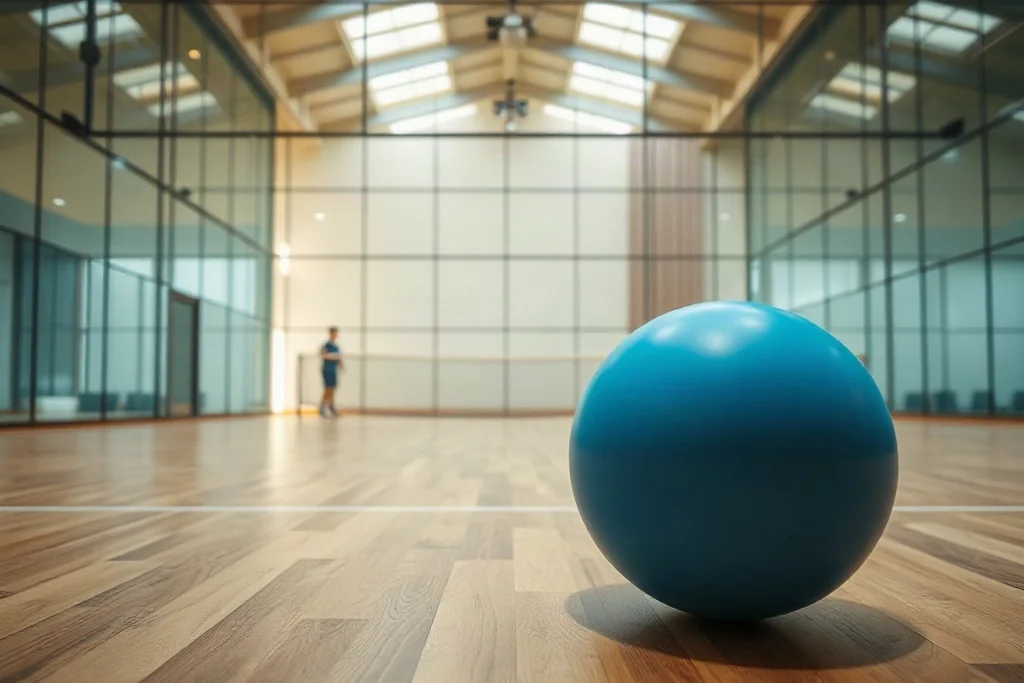
Racketball is a racket sport played on the same four-walled court as squash, but with a larger, softer ball and a shorter-handled racket. It is often described as the easy-entry cousin of squash, and for adults new to racket sports it is one of the friendliest ways to start.
This guide explains what racketball is, why the softer ball changes everything and who tends to enjoy it most. It is written for adult beginners, so it assumes no experience of squash or of any other racket sport.
The softer ball changes the game
The single biggest difference in racketball is the ball. It is larger and softer than a squash ball, so it bounces lower off the front wall and stays in the air longer. The result is a slower, more forgiving game with longer rallies and far more time to think.
That extra time is what makes racketball such a good first sport. In squash a beginner is often still recovering from one shot when the next arrives, but in racketball there is enough time to move, read the ball and actually choose what to do.
The shorter racket and easier handling
A racketball racket has a shorter handle and a slightly larger head than a squash racket. The compact shape is easier to control, which suits beginners and anyone who finds a long squash racket awkward to swing accurately.
Combined with the softer ball, the shorter racket lowers the barrier to entry noticeably. A new player can hit reasonable, consistent shots within a single session, which builds confidence far faster than a sport where the first hour is spent simply missing the ball.
Who racketball suits best
Racketball is ideal for adults returning to sport, for players who want a gentler workout than squash and for anyone who values a long rally over a short explosive exchange. It is also popular with older players because the pace is lower and the joints take less of a pounding.
It is not only a beginner game, though. Skilled players use racketball for fitness and touch training, and a competitive racketball match at club level is a genuine test of length, patience and movement.
Racketball and fitness
Because rallies last longer, racketball can be an excellent aerobic workout. The effort is more continuous than squash, so players build stamina steadily, and the lower impact is kinder to knees and ankles than a hard-court sport.
That combination — real fitness with less shock on the body — is a large part of why racketball keeps growing in UK clubs. It offers the health benefits of squash in a format that suits a wider range of adults.
The court is the same
Racketball uses the same four-walled court as squash, the same T position and largely the same tactical ideas of length and width. That means a player can move between the two sports without learning a new court or a new set of markings.
Sharing a court also makes club life simpler. Members book one court and choose their game that evening, and a racketball player can try squash without any change of venue or equipment beyond a ball and a racket.
Racketball and squash clubs together
Racketball is almost always played in a club that also offers squash, because the two sports share the same court. That arrangement is convenient: members book one court and decide on the night which game they fancy, without needing a second venue or a second membership.
It also means a racketball player is never short of opponents. In a mixed club there is always someone who prefers the softer ball, and club nights naturally pair players of similar level across both sports.
Getting started with racketball
Starting racketball requires very little. A short-handled racket, a racketball, court shoes and a willing partner are enough for a first session, and clubs generally lend the racket and ball to new members.
The best first step is a club night, where you will meet players at a similar stage and can try the game in a relaxed setting. From there, a gentle mix of club sessions and casual bookings will build your touch and fitness in equal measure.
Why adults choose racketball first
The features that make racketball an easy entry into racket sports:
- A softer, slower ball with longer, more forgiving rallies.
- A shorter racket that is easier to control than a squash racket.
- Lower joint impact than squash and other hard-court sports.
- The same court and tactics as squash, so you can switch easily.
- Club nights where beginners and improvers mix comfortably.
Racketball essentials
A quick overview of the sport for a new adult player:
| Feature | Racketball |
|---|---|
| Court | Same four-walled court as squash |
| Ball | Larger, softer and slower than squash |
| Racket | Shorter handle, slightly larger head |
| Typical rally | Longer and steadier than squash |
| Best for | Newcomers and returning adult players |
An easy first racket sport
Racketball removes most of the obstacles that stop adults from trying a racket sport. The ball is forgiving, the rallies last long enough to learn from and the same court serves both squash and racketball. If you have been curious about racket sports but unsure where to begin, racketball is the gentlest and most encouraging door to walk through.
Read next
Racketball vs squash: the real differences
Court, ball, racket and pace compared, and how to choose the right game for you.
Racketball equipment for adult beginners
Rackets, balls, eyewear and shoes: everything an adult needs before a first racketball session.
Simple racketball tactics that win club games
Length, patience and positioning — the tactics that decide most club-level racketball matches.