
Simple racketball tactics that win club games
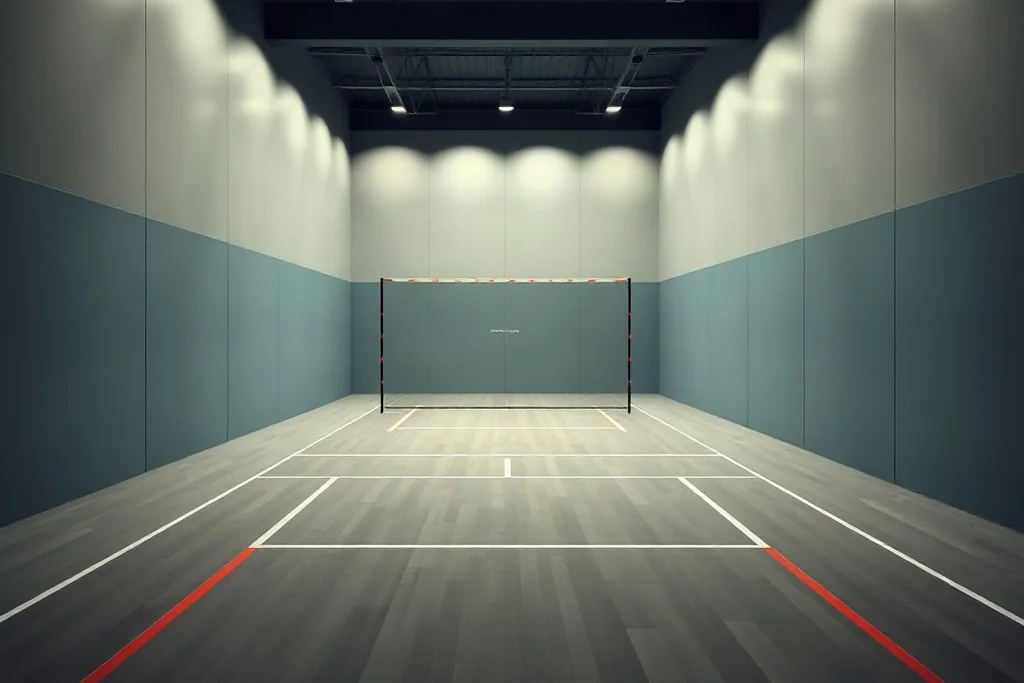
Racketball can look like a straightforward game of hitting the ball, but club matches are decided by simple tactics rather than by power. The players who win most often are the ones who move their opponent around and wait for the opening instead of forcing it.
This guide explains the tactics that matter most at club level — length, patience, positioning and shot selection — in plain language for adult players. It is aimed at beginners and improvers who want to win more of the matches they already play.
Length before power
The foundation of racketball tactics is length: hitting the ball deep so it lands near the back wall and forces your opponent to retreat. A long rally that keeps the ball at the back is far more useful than a hard shot that bounces back into the middle of the court.
Beginner matches are usually lost, not won. The player who keeps hitting good length and avoids handing over easy chances will watch the opponent make the error first, which is why patience is the single most valuable tactic in club racketball.
Width stretches the court
After length, width is the second tool. Hitting the ball to alternate sides pulls your opponent from one wall to the other, and a player who is constantly changing direction will tire and leave gaps.
Combining deep length with cross-court width is the basic pattern of pressure. It does not require great power, only the discipline to keep placing the ball away from the middle of the court where your opponent wants to stand.
Recover to the T
Between every shot, your job is to move back towards the T at the centre of the court. From the T you can reach any corner in a stride or two, so recovering there keeps you in control of the rally even when you are not attacking.
New players tend to admire their own shot and stay in the corner. That habit hands the middle of the court to the opponent and, with it, the advantage. Recovering early is a habit worth practising deliberately in every session.
Patience wins club matches
The instinct in a club match is to try to win the point with a fancy shot. In racketball that instinct usually backfires, because the soft ball and slow pace give the opponent time to cover even a good attacking shot.
The better approach is to build the rally, keep the ball deep and wait until the opponent is clearly out of position before attacking. Points won through patience feel less spectacular than winners, but they win far more matches.
Reading your opponent
A useful club tactic is to notice where your opponent struggles. A player who is slow to the front can be moved forwards with drops, while a player who loves the front can be pinned at the back with long, deep shots.
This is simple observation rather than deep strategy. Watch the first few rallies, find the pattern your opponent dislikes and repeat it. Most club players have one obvious weakness that a patient opponent can exploit.
Serving and the first shot
The serve sets up the rally, so a serve that lands deep and tight to the side wall gives you an immediate advantage. Avoid serving softly into the middle, where your opponent can attack the very first shot.
The same principle applies to the return: aim to keep the ball deep and away from the middle. A tight, deep return forces your opponent to play from the back and buys you time to recover to the T.
Fitness and tactics together
Good tactics and good fitness reinforce each other in racketball. A player who can keep moving between shots can afford to be patient, and a patient player spends less energy chasing desperate winners. The two habits grow together over a season of regular play.
That is why turning up consistently matters more than any single clever tactic. Club racketball rewards the player who plays twice a week for months, because length, positioning and patience are all built through repetition rather than through study.
Keeping it simple under pressure
When a rally gets tense, the temptation is to try something clever. In racketball the opposite works better: return to the basics of length, width and recovery, and let the pressure fall on the player who has to create something.
Because the ball is slow and the court is tight, a steady player under pressure is very hard to beat. Simplicity is not a lack of ambition — at club level it is the tactic that wins.
Core racketball tactics
The habits that decide most club-level racketball matches:
- Hit length first; keep the ball deep in the back corners.
- Use width to move your opponent from side to side.
- Recover to the T after every shot you play.
- Stay patient and let the opponent make the error.
- Serve and return tight and deep to avoid easy attacks.
Tactic, when to use it
A simple guide to choosing the right tactic in a rally:
| Situation | Tactic | Why it works |
|---|---|---|
| Opponent slow to the front | Use the drop shot | Pulls them away from the T |
| Opponent loves the front | Pin them deep | Denies their favourite position |
| Rally gets tense | Return to length | Puts pressure on the opponent |
| You are stretched | Play safe width | Buys time to recover the middle |
Simple tactics, more wins
Racketball rewards the player who keeps things simple. Hit good length, use width, recover to the middle and stay patient until the opening appears. None of that needs great power or perfect technique, which is exactly why it works so well for adult club players. Play the percentages and let the opponent take the risks.
Read next
What is racketball? The easy-entry racket sport
How racketball works, why the softer ball makes it beginner-friendly and who it suits best.
Racketball vs squash: the real differences
Court, ball, racket and pace compared, and how to choose the right game for you.
Racketball equipment for adult beginners
Rackets, balls, eyewear and shoes: everything an adult needs before a first racketball session.