
Warming up and cooling down for squash
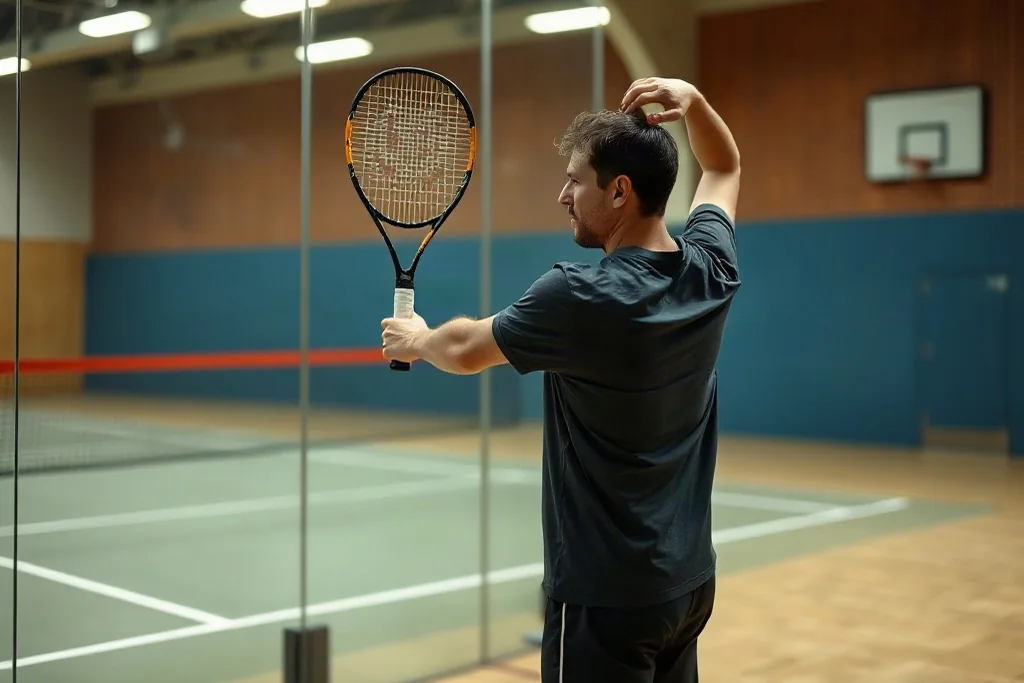
Squash and racketball ask the body to stop, start and change direction many times a minute, which puts real strain on ankles, knees and calf muscles. A short warm-up before play is the simplest way to reduce the risk of injury and to feel better on court from the first rally.
This article sets out an easy warm-up and cool-down routine for adult players. It is practical and brief — nothing here needs special equipment or a lot of space, and it can be done in the corridor or on court before you start.
Why warming up matters in racket sports
A cold muscle is less elastic and more prone to strain, and squash and racketball demand sudden lunges and twists that a cold body handles poorly. Five minutes of gentle movement raises muscle temperature and prepares the joints for the load ahead.
Adults especially benefit, because recovery is slower than in youth. A consistent warm-up is not a chore; it is what allows a player in their forties or fifties to keep playing without nagging injuries interrupting every season.
Start with easy movement
Begin with a few minutes of light whole-body movement to raise your heart rate and warm the muscles. Jogging gently around the court, skipping or simply moving through the court edges all work well.
The goal is to feel warm and slightly loose, not tired. This phase should be easy enough that you could hold a conversation throughout, which tells you the body is warming up rather than already working hard.
Loosen the ankles and calves
The ankles and calves take enormous load in squash, so give them specific attention. Gentle ankle circles, heel raises and a few slow calf stretches prepare the lower leg for the lunges that define the sport.
Move into each position slowly and hold briefly rather than bouncing. A controlled stretch prepares the tissue far better than a quick, jerky movement, and it helps you notice any tightness before you push it hard.
Prepare hips and knees
Squash involves deep lunges and repeated changes of direction, so the hips and knees need attention too. Gentle hip circles, side-to-side steps and a few controlled knee bends warm the muscles around these joints.
Keep the movements smooth and within a comfortable range. The aim is to prepare, not to stretch to your limit — save the deep movement for the court once the body is properly warm.
Wake up the shoulders and wrists
The upper body works hard as well. Swing the racket gently a few times, rotate the shoulders and loosen the wrists with soft circles before stepping onto court.
A slow build-up of racket swings is useful because it rehearses the actual movement you are about to make. A few easy drives against the wall after the warm-up bridge the gap between warming up and playing hard.
Ramp up, do not jump in
The first few minutes of play should still be gentle. Start with relaxed rallies, feel the ball and let your body adjust before you chase anything at full pace.
Players who sprint into the first rally after a two-minute warm-up are the ones most likely to pull something. A gradual ramp-up costs nothing and is one of the simplest habits that keeps adults playing week after week.
Cool down after play
The cool-down matters as much as the warm-up, even though it is the part everyone skips. Walk a couple of gentle laps of the court and let your breathing settle before you stop completely.
This helps the body return gradually to rest rather than stopping abruptly after hard effort, which can leave you feeling light-headed. A short, calm finish also gives the muscles time to relax before you sit down.
Stretch gently and rehydrate
Finish with a few slow stretches for the calves, hips and shoulders while the muscles are still warm, holding each one comfortably for a few seconds. Then drink some water.
Warm muscles respond best to stretching, so the minutes right after play are the ideal time. Combined with rehydration, this simple routine reduces next-day stiffness and helps you recover in time for your next session.
A simple warm-up and cool-down
The routine in short, for before and after every session:
- Two to three minutes of easy movement to raise the pulse.
- Ankle circles, heel raises and gentle calf stretches.
- Hip circles and controlled knee bends for the lower body.
- Slow racket swings for the shoulders and wrists.
- A calm walk and light stretches to cool down.
Warm-up in four steps
A practical sequence before you play squash or racketball:
| Step | What to do | Time |
|---|---|---|
| Raise | Easy jogging or skipping | 2–3 min |
| Loosen | Ankles, calves, hips, knees | 2 min |
| Prepare | Gentle racket swings | 1 min |
| Ramp | Easy rallies before full pace | A few minutes |
Five minutes that protect a season
A warm-up and cool-down take only a few minutes but protect the joints and muscles that keep you playing. Move easily, loosen the ankles, hips and shoulders, ramp up gently and finish by calming down. Do it every session and you give yourself the best chance of playing squash and racketball for years without interruption.
Read next
Solo practice: drills you can run alone
Court drills that build touch, fitness and length without needing a partner.
Hitting good length: the shot that wins matches
Why deep shots into the back corners decide club matches and how to practise hitting them.
Common squash injuries and how adults avoid them
Ankles, knees and eyes: the risks adult players face and the simple habits that reduce them.