
Common squash injuries and how adults avoid them
Squash and racketball are safe sports when played sensibly, but the quick changes of direction and the confined court do create a handful of common injury risks. Knowing what they are is the first step to avoiding them.
This article looks at the injuries adult players most often pick up — ankles, knees, muscles and eyes — and the simple habits that reduce the risk. It is general information for club players and is not a substitute for advice from a qualified professional.
Ankle injuries
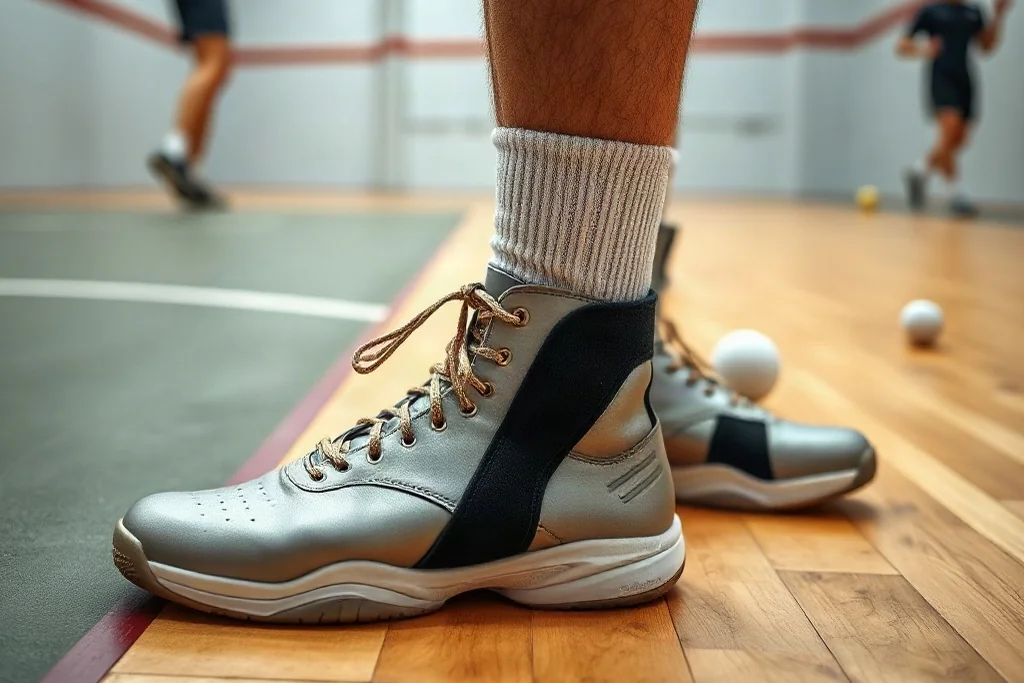
Twisted ankles are among the most common squash injuries, usually caused by a sudden lateral movement or by wearing the wrong shoes. Proper court shoes with good grip and low support are the single best protection.
Strengthening the ankle with simple balance exercises and warming up before play also help. If an ankle does turn, stop playing, rest it and seek advice before returning rather than playing on and risking a worse injury.
Knee strain
The deep lunges and rapid stops of squash load the knees heavily. Pain around the kneecap is common in players who increase their training too quickly or who lack strength in the surrounding muscles.
Building leg strength gradually and progressing your sessions slowly are the best protections. Sudden jumps in how often or how hard you play are what most often upset the knee, so increase training gently over weeks rather than days.
Muscle strains and the calf
Calf and hamstring strains happen when a cold muscle is asked to sprint or lunge without warning. They are strongly associated with skipping the warm-up, especially in older players.
A proper warm-up that raises muscle temperature before hard movement prevents most of these. If you do feel a sudden pull, stop immediately and treat it with rest rather than trying to play through the pain.
Eye injuries
The eye is the most serious risk in racket sports, because a ball or a racket can reach the face during a close rally. This risk is higher in racketball, where the ball is larger and often played near the body.
Lightweight protective sports eyewear removes almost all of this risk and is increasingly common in clubs. Players should also never swing when an opponent is in front of them, and should call lets rather than risk contact.
Shoulder and elbow niggles
Repetitive swinging, especially with a heavy racket or a poor grip, can lead to shoulder or elbow irritation over time. It tends to build gradually rather than appearing suddenly.
Using an appropriately light racket, replacing slippery grips and warming up the shoulder all help. If a niggling pain persists, reducing play and getting it looked at early is far better than pushing on until it becomes a lasting problem.
The role of the warm-up
Almost every common squash injury is less likely after a proper warm-up. Raising muscle temperature and loosening the ankles, hips and shoulders prepares the body for the sudden demands of the game.
The warm-up does not need to be long. Five minutes of easy movement and joint loosening is enough to make a real difference, and it is the single habit most strongly associated with staying injury-free.
Pacing and recovery
Adults recover more slowly than younger players, so pacing matters. Increasing how often you play too quickly is a frequent cause of overuse injuries in players returning after a break.
Build up gradually, take rest days and listen to your body. A steady increase in training over several weeks is far safer than a sudden jump, and it keeps progress sustainable.
Playing safely for the long term
Looking after yourself is what allows a long playing life in squash and racketball. Good shoes, a warm-up, sensible pacing and eyewear cover almost all of the significant risks.
Add a little strength and balance work off court and you give yourself the best chance of playing for decades. The goal is not to avoid the sport but to keep enjoying it without avoidable interruptions.
Reducing injury risk as an adult player
Simple habits that protect you on court:
- Wear proper non-marking court shoes with good grip.
- Warm up for five minutes before every session.
- Build up how often and how hard you play gradually.
- Wear lightweight protective eyewear, especially in racketball.
- Never swing when an opponent is in front of you.
Common risks and how to reduce them
A plain-language guide for adult club players:
| Risk | Main cause | Best protection |
|---|---|---|
| Twisted ankle | Sudden lateral movement | Court shoes and balance work |
| Knee strain | Too much training too soon | Gradual progression |
| Muscle strain | Cold muscles | A proper warm-up |
| Eye injury | Ball or racket near the face | Protective eyewear |
| Shoulder or elbow | Overuse and poor grip | Light racket, fresh grips |
Stay on court by looking after yourself
Most squash and racketball injuries are preventable with a few simple habits: the right shoes, a warm-up, gradual progression, eyewear and a safe attitude on court. None of that requires special talent, and all of it protects the sport you enjoy. Play sensibly and you give yourself the best chance of a long, uninterrupted playing life.
Read next
Warming up and cooling down for squash
A short, practical warm-up and cool-down routine that helps adult players avoid injury.
Solo practice: drills you can run alone
Court drills that build touch, fitness and length without needing a partner.
Hitting good length: the shot that wins matches
Why deep shots into the back corners decide club matches and how to practise hitting them.