
What is squash? A beginner’s guide to the game
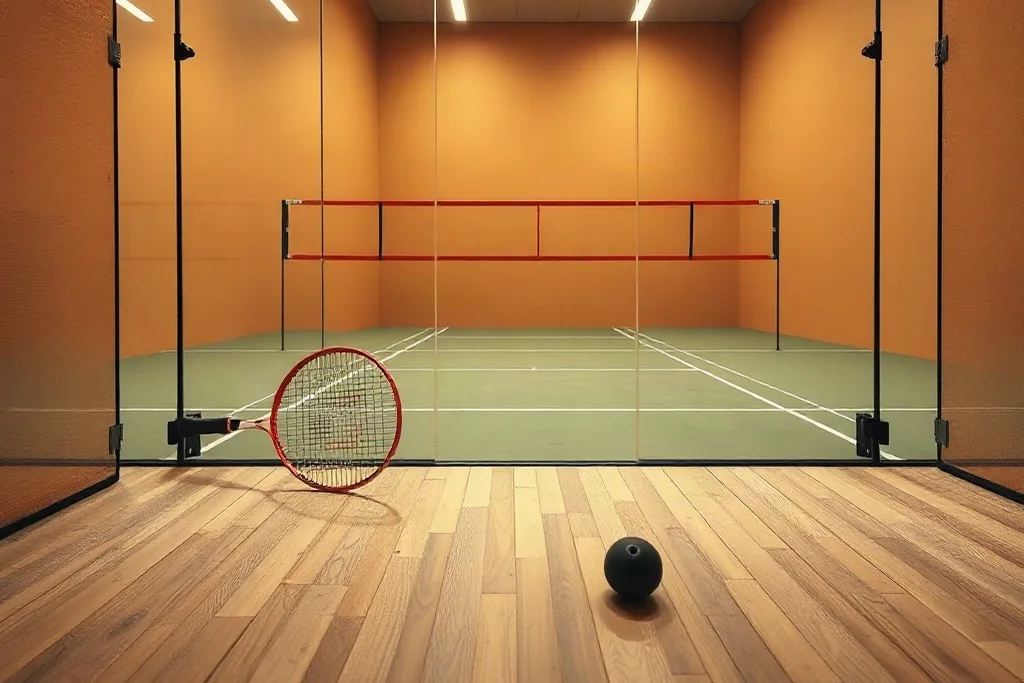
Squash is a fast, indoor racket sport played by two people on a four-walled court with a small rubber ball. It is one of the best all-round workouts in sport: a twenty-minute game can involve as much movement as a long run, yet the effort arrives in short bursts with a rest between every rally.
This guide explains what squash is, how a match is played and why it suits adults of almost any starting level. If you have never held a squash racket, it is written for you — no prior knowledge is assumed, and nothing here replaces a first friendly session on court.
The court and the two players
A squash court is a room with four walls, a wooden or composite floor and red lines painted on the front wall. The ball must be hit against the front wall above the tin and below the upper line; everything in between is a legal shot. Two players share the room, so control matters as much as power.
The narrow box in the middle of the court, called the T, is the best place to stand. A player who recovers to the T after each shot sees the whole court and reaches most balls in a single stride. Beginners lose points far more often by standing in the wrong place than by missing the ball.
How a rally actually works
A rally begins with a serve from the service box, then the ball is struck alternately by each player until someone fails to return it or the referee calls a let or stroke. The ball is allowed to bounce once on the floor, and it may also hit the side or back walls after touching the front wall.
Because the ball can use any wall, rallies bend in unexpected directions. Reading those angles is the skill that grows fastest with practice, and it is why squash feels confusing for the first hour and obvious a few sessions later.
Movement is the real skill
Squash is decided by movement rather than by brute force. Long, deep shots to the back corners pull your opponent away from the T, and the short drop shot then finishes the rally while they are still travelling. The player who controls the middle of the court controls the game.
Good club players rarely hit the ball as hard as they can. They hit it to a place, move back to the middle and repeat until a gap appears. That patience is a habit any adult can learn, and it is far more valuable than any single spectacular shot.
Fitness and what to expect
A typical club session lasts an hour and mixes short, intense rallies with rests. That pattern is gentle on the joints compared with running on hard ground, and most adults adapt within a few weeks if they warm up first and keep early sessions short. Stamina builds quickly once you are playing regularly.
Squash also sharpens reaction time and balance. Chasing a ball that can rebound off three walls trains the brain to read movement early, and the stop-start nature of the game builds leg strength without long, monotonous training.
Squash for adults who are new to racket sports
There is no age limit for learning squash, and adults often progress faster than younger players because they practise deliberately and pace themselves. A first season is about learning to move, return the ball and enjoy the rallies rather than about winning anything.
The most common beginner mistake is trying to win points before learning to keep the ball in play. Consistency beats aggression early on, and a steady player who keeps the ball alive will beat a wild hitter almost every time at club level.
What gear you need to begin
A squash racket, a non-marking court shoe and a squash ball are all you need for a first session. Clubs often lend rackets, so you can try the sport once or twice before buying anything. Court shoes matter more than people expect because hard running soles damage the court and offer poor grip.
Choose a ball to suit the temperature of the court: a brand-new ball is slow and bouncy, while a warm ball moves quickly. Beginners do better with a livelier, newer ball rather than a dead one that never comes up off the floor.
Playing safely from the first session
Squash shares a confined space, so safety habits matter from day one. Call your intention before you swing, give your opponent room to play the ball and stop the rally rather than collide when you are both going for the same shot.
Always warm up, keep your eyes on the ball and never swing when someone is standing in front of you. These three habits prevent almost all of the avoidable accidents that happen between beginners.
A simple checklist before your first game
There is very little to prepare beyond turning up with the right attitude and a little energy:
- Borrow or buy a beginner-friendly racket with a generous sweet spot.
- Wear non-marking court shoes, never outdoor running shoes.
- Start with short sessions and build up as your fitness improves.
- Learn the T position before you worry about hitting winners.
- Ask an experienced member to explain let and stroke calls early.
Squash at a glance
The basics of the game, summarised for a new adult player:
| Aspect | What it means |
|---|---|
| Players | Two, sharing one four-walled court |
| Ball | Small, hollow and made of rubber |
| Scoring | Rally scoring to eleven points per game |
| Key position | The T, in the middle of the court |
| Main workout | Short, intense rallies with rests |
| Best first step | A club night or a friendly hit |
Start with a friendly game
Squash rewards patience and movement more than power, which makes it a wonderful sport for adults starting late. Learn where to stand, keep the ball alive and let the rally do the rest. The quickest way to understand the game is not to read about it but to book a court, borrow a racket and play a few gentle rallies with someone at your level.
Read next
Squash rules and scoring explained simply
Points, games, the serve and the calls you hear on court — the rules a new player really needs.
Squash equipment: rackets, balls and court shoes
What to look for in a first racket, how balls differ and why court shoes matter so much.
The main squash shots and when to play them
Drive, drop, boast and volley: the core shots and the simple tactics behind each one.